
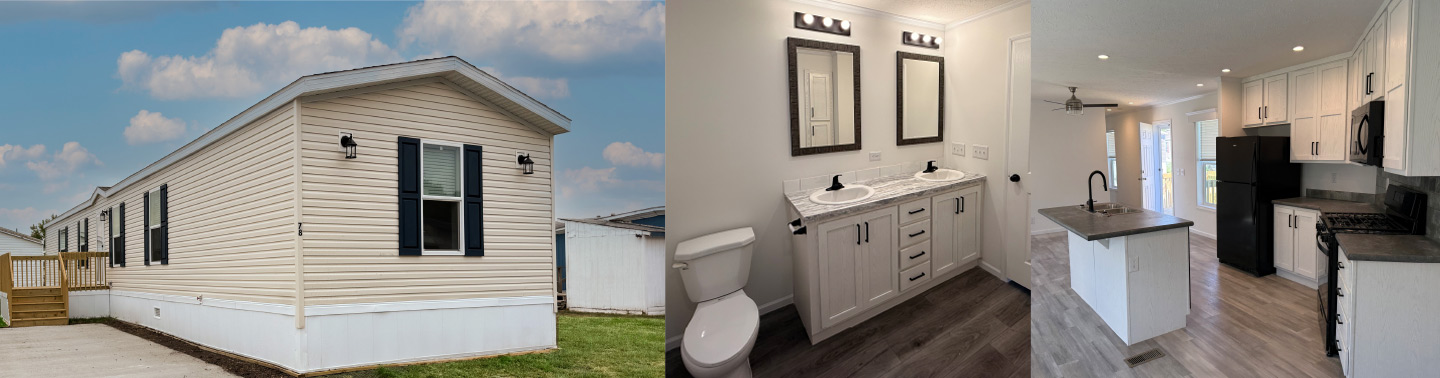
BUILT INSIDE VS. OUTSIDE
Sure, a mobile home is built in a factory, but did you ever consider:
A MOBILE HOME IS BUILT:
- By a crew of well-paid employees that work together everyday like a well-oiled machine
- Following strict adherence to construction guidelines
- In the comfort of the indoors in a climate controlled environment
A SITE-BUILT HOME IS BUILT:
- By a collection of various contractors just doing the job for the lowest bid
- Working outside in the heat and humidity and the cold and every weather condition imaginable
When a site-built house is left partially constructed and exposed to the weather for months at a time, it can develop several serious issues. Here are some of the main risks you’ll want to be specific about when discussing exposure-related damages:

Mold & Moisture Problems
- Framing absorption: Unprotected lumber readily absorbs rainwater, snow, and humidity. If it isn’t dried quickly, mold colonies can form within days.
- Trapped moisture: Once insulation, drywall, or vapor barriers are installed, any existing dampness gets sealed in. This leads to hidden mold growth inside walls and ceilings.
- Health and liability risks: Mold not only damages materials but also creates health hazards, leading to potential claims for uninhabitable conditions.

Structural Degradation
- Warping and swelling: Repeated wetting and drying cycles can warp floor joists, studs, and roof decking, compromising structural integrity.
- Delamination: Plywood and OSB (oriented strand board) can swell, separate, or lose strength when exposed to prolonged moisture.
- Foundation exposure: If foundations or basement areas aren’t properly protected, water intrusion can lead to cracks or spalling.

Quality & Finish Issues
- Compromised insulation: Fiberglass batts and blown-in insulation lose their R-value (insulating power) when damp. This can permanently reduce efficiency and increase energy costs.
- Drywall and paint defects: Gypsum board left exposed can crumble, sag, or develop long-term staining, which later telegraphs through finishes.
- Flooring failures: Subfloor moisture can cause hardwood and laminate flooring installed later to buckle, gap, or squeak.

Roof & Envelope Problems
- Roof leaks: If roofing materials (felt, shingles) are delayed, water can penetrate roof decking, leading to rot and leaks that may not show up until years later.
- House wrap deterioration: UV exposure and prolonged weathering weaken protective wraps, reducing their ability to shed water and air.

Long-Term Performance Issues
- Premature aging: Even if the home is eventually finished, exposure during construction accelerates deterioration. The home may have a shorter lifespan compared to one kept dry throughout construction.
- Warranty disputes: Builders often face disputes over whether defects are caused by poor workmanship or prolonged exposure—an issue that insurers may also have to sort out.

Specific Mold Scenarios
- Roof trusses: Black mold commonly forms on attic trusses and sheathing before the roof is closed in.
- Basements & crawlspaces: Standing water in these areas during open construction leads to microbial growth that spreads upward.
- HVAC contamination: If ductwork is installed before the home is sealed, moisture and mold spores can contaminate the entire air system.
In short, prolonged exposure of site-built homes under construction to the elements creates both structural risks (weakened materials, warping, rot) and environmental risks (mold, poor indoor air quality, insulation failure). These factors directly impact quality, livability, and insurability.